Create a Kids’ Play Area Without Losing Floor Space
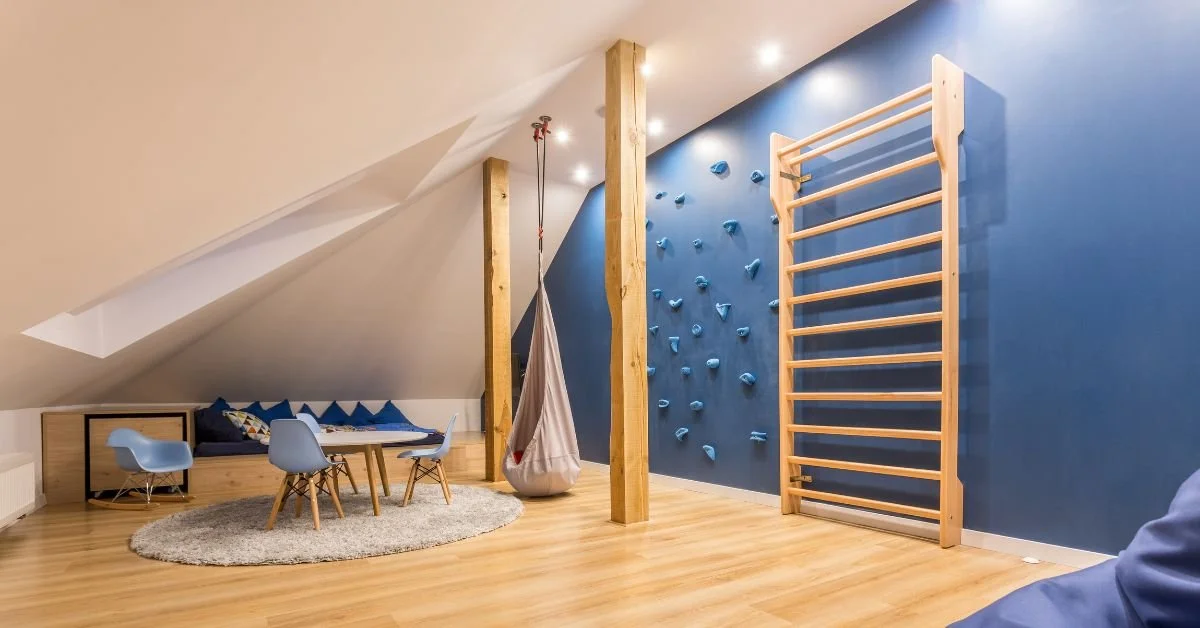
Children need room to move, but not every home has space for a dedicated playroom or large indoor equipment. In many households, the same room has to work for homework, quiet time, and everyday play.
You can create a kids’ play area without losing floor space by looking beyond the center of the room. An underused wall can become a place for movement while the rest of the space stays open for family life.
Start With How Your Family Uses the Room
Before adding anything, pay attention to how the room works each day. Notice where people walk and where children gather. Identify which areas need to stay clear.
A play feature should support the room instead of competing with it. A finished-basement wall may work well because the room already allows movement. A bedroom or bonus room can also work if the activity area sits away from beds and doorways.
Think about supervision as well. A feature tucked behind furniture may save space, but it can make it harder to see what children are doing. The best location offers a clear view without getting in the way of the busiest path.
Use the Walls Before Filling the Floor
When a room already feels crowded, an empty wall may offer more possibilities than you expect. Wall-based activities give children a clear place to move without adding another bulky item to the middle of the room.
A low climbing wall is one option. A mounted activity panel can work in a smaller area, while compact equipment that folds away may suit a shared room.
The goal is not to cover every available inch. One well-planned feature feels more inviting than several activities competing for attention. Leaving open wall space around it can help the room feel calmer and more intentional.
Leave Enough Room for Safe Movement
Saving floor space does not mean removing the clear area children need around an activity. Before choosing a wall, look at what sits beside it and what happens in front of it.
A suitable area should include:
A clear path around the activity
Enough room for appropriate padding
Safe distance from windows and doors
A wall that can support the planned feature
Move sharp-edged furniture away from the activity zone, and make sure mats lie flat. Padding should not create a tripping hazard in the room’s main walking path.
If you are unsure whether a wall can support mounted or weight-bearing equipment, ask a professional before installation. It is better to choose a simpler activity than to force a feature into a space that cannot safely accommodate it.
Choose an Activity That Can Grow With Them
Children’s interests and abilities can change quickly, so avoid designing a play area that only works for one stage. A feature with adjustable challenges can stay useful longer and serve siblings with different comfort levels.
If your family has both younger and older children, planning a climbing wall for different skill levels can help the feature remain useful as their abilities change. Lower, simpler routes may suit younger children, while other routes can offer a fresh challenge later and be perfect for older children.
The same idea applies beyond climbing. Movement cards can be rotated, and activity panels can introduce new tasks. Small changes keep the area interesting without requiring a full room makeover.
Make the Feature Feel at Home
An active-play area does not need to make your home look like a commercial gym. Thoughtful choices can help it feel like a natural part of the room.
Start with colors that already appear in the space. A restrained palette can make climbing holds or mats feel coordinated instead of visually overwhelming. Simple shapes and consistent finishes can give the area a polished look.
Storage matters just as much as color. Nearby cabinets or a low storage bench can hold loose accessories after playtime. When everything has a home, the room can return to its regular purpose more easily.
By keeping the feature contained and the rest of the room flexible, you can create a kids’ play area without losing floor space to equipment that rarely gets used.
Pick Finishes That Can Handle Real Life
Any area designed for active children will collect fingerprints and scuffs. Choosing practical finishes from the beginning makes the space easier to enjoy.
Because active areas naturally show wear, easy-to-maintain design choices can help the whole room continue to feel polished. Wipeable paint can make everyday cleanup easier. Washable mat covers can also reduce the work required between deeper cleanings.
Avoid placing delicate décor directly beside the activity. Artwork may look attractive there at first, but it can make the area harder to use comfortably. Keep the nearby design simple, so children have room to focus on movement.
Know When a Different Option Makes More Sense
A wall-mounted play feature will not suit every home. Rental restrictions may rule out a permanent installation, and limited clearance may make another approach safer.
In those situations, look for options that can be stored or moved. Foldable mats can still encourage active play, while movement games can work without changing the wall. A portable setup may also make more sense in a room that serves several purposes throughout the day.
There is no benefit in squeezing a large feature into a space that already feels cramped. The right solution should make the room more useful rather than create another obstacle.
Make Movement Part of the Room
A successful play area should fit the home you already have. By using vertical space carefully and keeping pathways clear, you can give children room to move without surrendering the entire room.
The most effective setup is often the simplest one. A wall-based activity with proper clearance can support everyday play, and nearby storage can help the room shift back to its usual purpose afterward.
When the design works with your family’s routines, active play feels like a natural part of the home instead of one more thing competing for space.